Peptides for Skin Health & Dermal Research
Explore peptides for skin research developed for laboratory investigations involving dermal signaling, extracellular matrix biology, fibroblast activity, structural-protein expression, topical peptide behavior, and other molecular mechanisms relevant to skin and dermatological science.
At Peptide Sciences, this focused category provides researchers with skin-specific peptide materials for controlled scientific and analytical investigation while connecting naturally with our broader cosmetic and collagen peptide research collections.
All compounds listed in this category are supplied strictly for laboratory, analytical, identification, and scientific research purposes.
What Are Peptides for Skin Research?
Skin research peptides are short amino-acid sequences investigated for their interactions with cellular pathways found within dermal and epidermal experimental models.
Depending on the peptide, researchers may investigate extracellular matrix signaling, fibroblast communication, collagen-associated pathways, structural-protein expression, topical peptide stability, cellular responses to environmental stress, or other mechanisms relevant to dermatological science.
These compounds provide molecular tools for studying skin biology without implying that the research material itself is a finished cosmetic or therapeutic product.
Matrixyl Peptide for Dermal Research
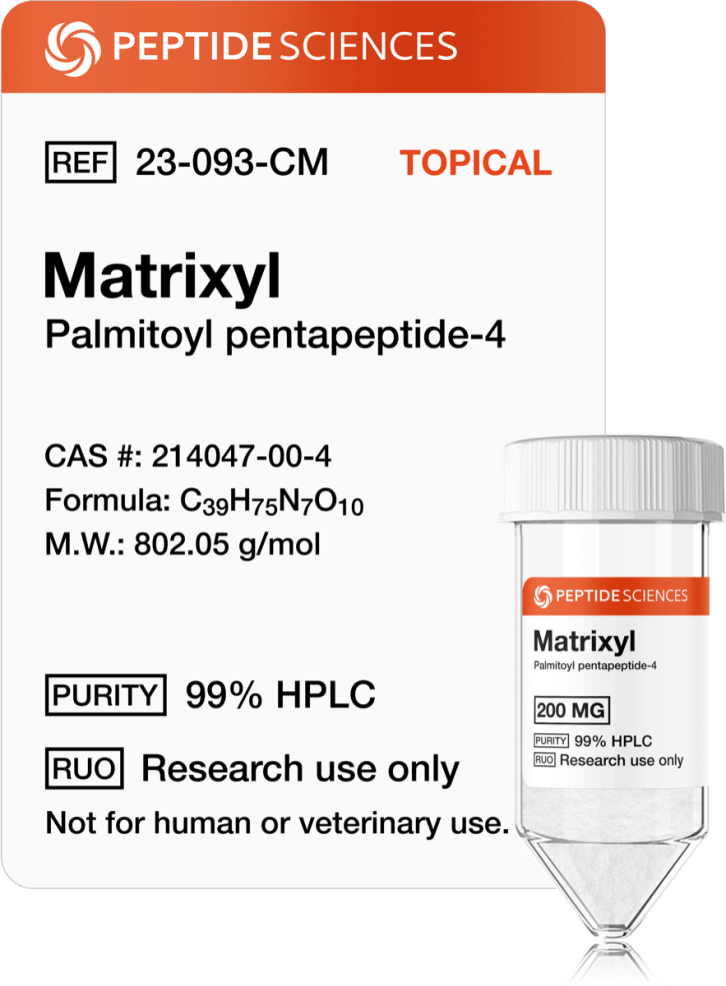
The primary compound within this category is Matrixyl 200mg (Topical).
Matrixyl, commonly associated with the peptide sequence Pal-KTTKS, is a palmitoylated peptide used in laboratory investigations involving extracellular matrix signaling and fibroblast-associated biological pathways.
The palmitoyl component gives Matrixyl different physicochemical characteristics from an unmodified peptide sequence, making it useful for research involving peptide stability, lipid-associated peptide behavior, and topical experimental systems.
Matrixyl & Extracellular Matrix Research
The extracellular matrix provides structural and biochemical support for cells within tissue. In dermal research, investigators frequently examine how fibroblasts communicate with this matrix and how signaling mechanisms influence the expression and organization of structural proteins.
Matrixyl research may therefore involve experimental models examining:
- Extracellular matrix signaling
- Fibroblast-associated pathways
- Collagen-related gene expression
- Fibronectin-associated mechanisms
- Structural-protein signaling
- Dermal cellular communication
- Peptide-mediated matrix remodeling
These are laboratory research applications rather than claims that Matrixyl produces cosmetic or medical outcomes in humans.
Palmitoylated Peptides & Topical Research
Matrixyl belongs to an important group of palmitoylated peptides. Adding a lipid component to a peptide can modify characteristics such as lipophilicity, molecular interactions, stability, and behavior within experimental delivery models.
This makes palmitoylated peptides relevant to researchers investigating topical formulation science and peptide interactions within dermal-mimetic experimental environments.
Laboratories may compare palmitoylated sequences with non-palmitoylated peptides to examine how structural modification influences peptide behavior.
Skin Peptides & Fibroblast Research
Fibroblasts are a major focus of dermal research because they participate in extracellular matrix production and cellular communication within connective tissue.
Peptide-based experimental models can help researchers examine signaling associated with fibroblast activation, structural-protein expression, matrix organization, and cellular responses under different laboratory conditions.
Matrixyl provides a particularly relevant model because of its association with matrikine-related signaling and extracellular matrix research.
Skin Peptides & Collagen-Associated Research
Research into skin biology frequently intersects with collagen science. Collagen is a major structural component of the extracellular matrix, and several peptide classes are investigated for their relationships with collagen-associated signaling pathways.
Researchers interested primarily in copper-binding peptides, GHK-Cu, GHK, and other collagen-focused compounds can also explore the dedicated Peptide Sciences collagen research collection. Maintaining that research as a separate category helps prevent overlap between the site’s skin-specific and collagen-specific topical clusters.
Skin Peptides vs Cosmetic Peptides
The Peptides for Skin and Cosmetic Peptides collections cover related but distinct research areas.
This Skin Peptides category focuses primarily on dermal biology, extracellular matrix signaling, fibroblast activity, and skin-specific structural research.
The broader Cosmetic Peptides collection includes additional compounds associated with pigmentation research, synthetic expression-related peptide models, copper peptides, palmitoylated sequences, and other areas of cosmetic science.
Keeping these categories separated creates clearer navigation for researchers and helps each collection maintain a distinct scientific and search-engine focus.
Peptides for Skin Research Applications
Depending on the experimental system, skin peptides may be investigated in areas including:
- Dermal cellular signaling
- Extracellular matrix biology
- Fibroblast research
- Collagen-associated signaling
- Structural-protein expression
- Matrix-remodeling mechanisms
- Palmitoylated peptide research
- Topical peptide stability
- Experimental peptide-delivery systems
- Dermal responses to cellular stress
- Peptide-mediated cellular communication
Why Choose Peptide Sciences for Skin Peptide Research?
Peptide Sciences organizes skin-focused research materials separately from broader collagen and cosmetic peptide collections, allowing laboratories to identify compounds according to their primary experimental application.
Researchers should review individual product specifications, peptide sequence, concentration, formulation, available analytical documentation, storage requirements, scientific literature, and appropriate experimental controls before incorporating any material into a research protocol.
Browse all Peptide Sciences research peptides to explore additional cosmetic peptides, collagen research compounds, peptide blends, topical formulations, and specialized laboratory materials.
Research Use Only: All skin research peptides listed in this category are intended strictly for laboratory, analytical, identification, and scientific research. They are not cosmetics and are not intended for human or animal consumption, topical personal use, diagnosis, treatment, prevention of disease, or therapeutic application.