Peptides for Muscle Growth & Hypertrophy Research
Explore our specialized collection of peptides for muscle growth research for laboratory investigations involving skeletal-muscle development, hypertrophy-associated signaling, myostatin and activin pathways, growth-factor biology, myogenic differentiation, and musculoskeletal cellular research.
At Peptide Sciences, researchers can compare PEG MGF with two distinct Follistatin research variants, providing multiple experimental approaches to studying molecular pathways associated with muscle development and tissue regulation.
All products within this category are supplied strictly for scientific, analytical, identification, and laboratory research purposes.
What Are Peptides for Muscle Growth Research?
Muscle growth peptides are peptide or protein-based research compounds investigated for their interactions with biological pathways involved in skeletal-muscle development, cellular proliferation, growth-factor signaling, myostatin regulation, and myogenic processes.
Muscle tissue is regulated by a complex network of growth factors, inhibitory proteins, receptors, transcription factors, and intracellular signaling mechanisms. Researchers may use specialized compounds to investigate how these systems influence muscle-cell development and structural adaptation under controlled experimental conditions.
The peptides within this category target different molecular mechanisms and should therefore be evaluated independently rather than treated as interchangeable muscle-growth compounds.
PEG MGF for Muscle Growth Research
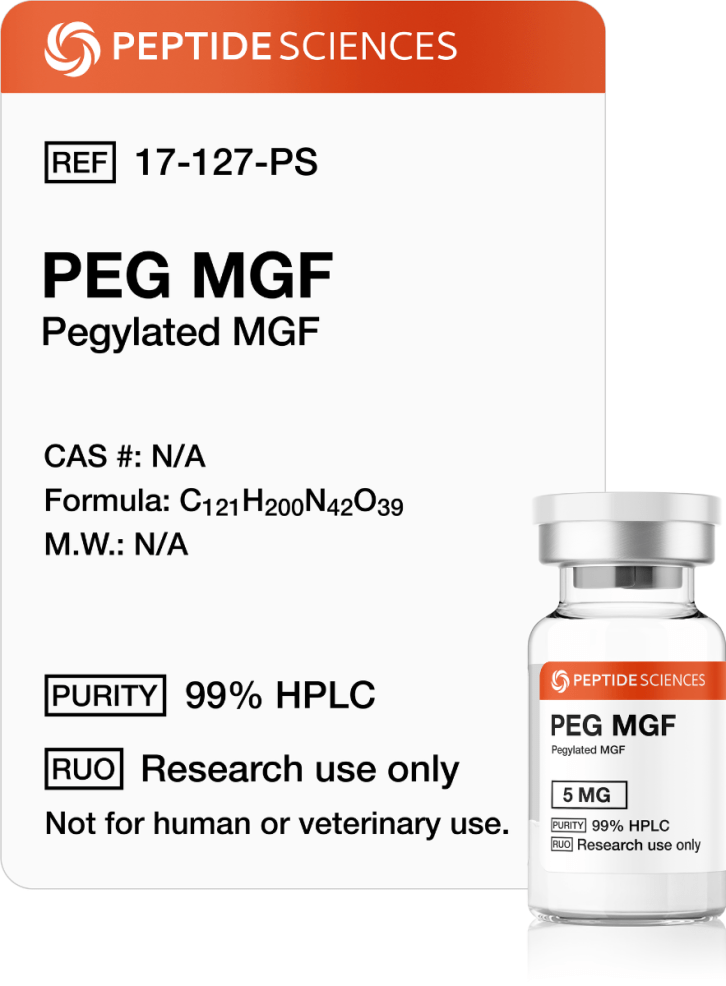
PEG MGF 5mg is a specialized research compound associated with mechano-growth factor and IGF-related signaling.
MGF, or Mechano Growth Factor, refers to an IGF-1 splice variant associated with experimental research into cellular responses to mechanical stress and skeletal-muscle signaling. PEGylation provides a modified research format that can be investigated separately from unmodified MGF.
Laboratory studies involving PEG MGF may examine molecular pathways associated with:
- IGF-related signaling
- Myogenic cellular responses
- Muscle satellite-cell biology
- Cellular proliferation
- Mechanical-stress signaling
- Musculoskeletal growth-factor pathways
These areas represent experimental research applications and do not imply muscle-building or performance effects in humans.
Follistatin 344 Research
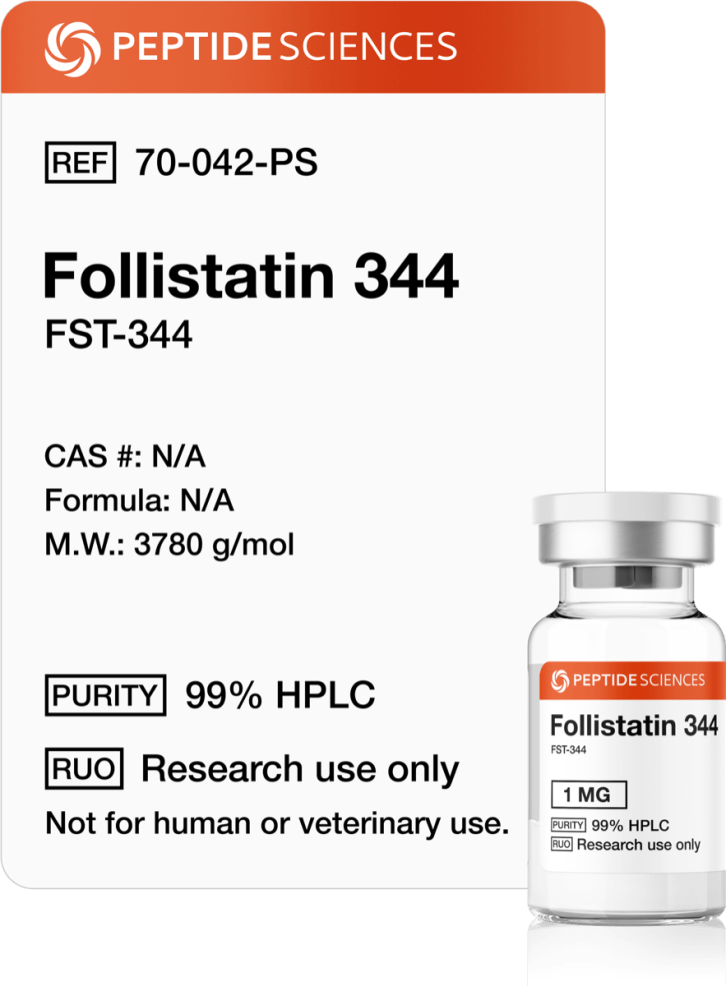
Follistatin 344 1mg provides researchers with a model for studying the relationship between Follistatin, myostatin, activin, and the transforming growth factor-beta signaling family.
Myostatin is an important regulator of skeletal-muscle development. Experimental research involving Follistatin frequently examines how binding interactions with myostatin and activin influence downstream receptor signaling and cellular processes associated with muscle biology.
Follistatin 344 can therefore be used in laboratory studies involving myostatin-associated signaling, activin regulation, cellular differentiation, musculoskeletal development, and related molecular pathways.
Follistatin 315 Research
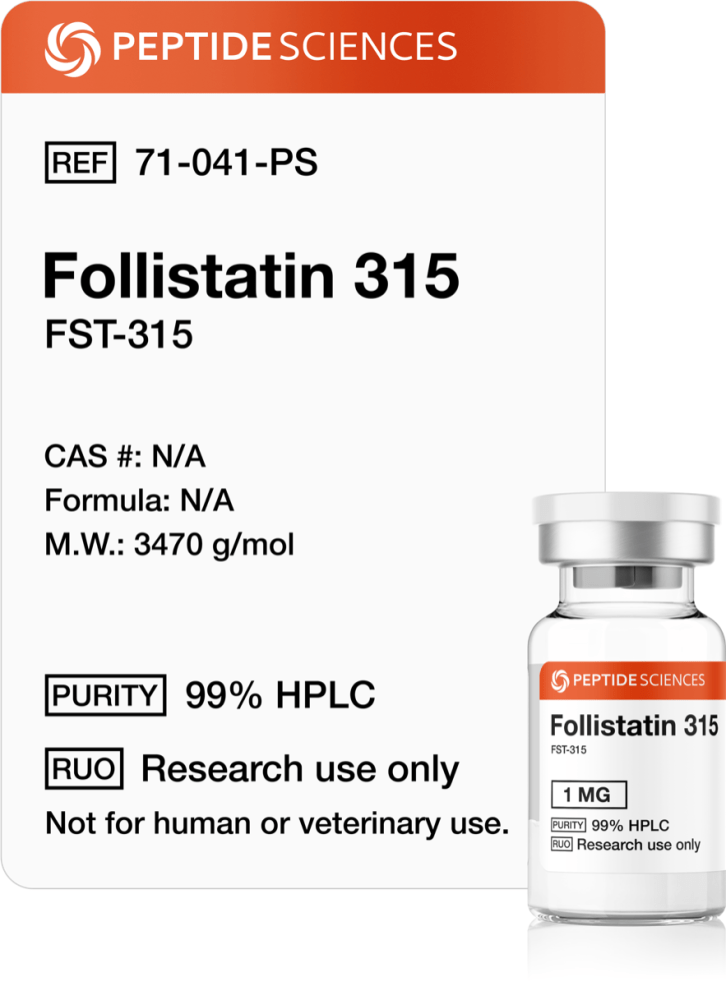
Follistatin 315 1mg provides another Follistatin research format for laboratories investigating TGF-β-family signaling and muscle-regulatory biology.
Follistatin 315 and Follistatin 344 represent different molecular forms, giving researchers an opportunity to investigate differences in distribution, binding behavior, molecular interactions, and biological signaling within experimental systems.
Research may focus on activin binding, myostatin-associated pathways, receptor availability, skeletal-muscle signaling, and mechanisms involved in tissue development.
Follistatin 344 vs Follistatin 315
Although both compounds are associated with Follistatin research, Follistatin 344 and Follistatin 315 should not be treated as identical research materials.
Differences between Follistatin isoforms can affect their molecular characteristics and experimental behavior. Researchers investigating muscle-regulatory signaling may therefore compare the two formulations to study how structural variation influences interactions with activin, myostatin, and related signaling proteins.
The appropriate Follistatin variant depends on the research hypothesis, experimental model, molecular target, concentration requirements, and analytical methods.
Myostatin & Muscle Development Research
Myostatin belongs to the transforming growth factor-beta superfamily and is an important subject in musculoskeletal research because of its role in regulating skeletal-muscle development.
Research into myostatin-associated mechanisms may examine:
- Myostatin ligand binding
- Activin-associated signaling
- TGF-β superfamily pathways
- Muscle-cell differentiation
- Myogenic signaling
- Musculoskeletal cellular development
- Protein-expression pathways
- Cellular growth regulation
Follistatin compounds provide researchers with molecular tools for investigating these regulatory systems within controlled laboratory environments.
PEG MGF vs Follistatin Research
PEG MGF and Follistatin approach muscle-development research through different molecular pathways.
PEG MGF is associated primarily with IGF-related and mechano-responsive signaling research, while Follistatin is particularly relevant to investigations involving myostatin, activin, and TGF-β-family regulation.
Studying these pathways independently can help researchers distinguish between growth-factor-associated signaling and mechanisms that regulate inhibitory signaling within skeletal-muscle models.
Muscle Growth Peptide Research Applications
Depending on the compound and experimental model, peptides in this category may be investigated in areas including:
- Skeletal-muscle development
- Muscle hypertrophy signaling
- Myogenic differentiation
- Satellite-cell biology
- Myostatin regulation
- Activin signaling
- TGF-β-associated pathways
- IGF-related molecular signaling
- Mechano-responsive cellular pathways
- Musculoskeletal tissue biology
- Cell proliferation and differentiation
- Growth-factor signaling research
References to hypertrophy and muscle growth describe areas of laboratory investigation rather than claims that these compounds increase muscle mass, strength, athletic performance, or recovery when used by humans or animals.
Choosing a Muscle Growth Research Peptide
Researchers should select a compound according to the specific biological mechanism being investigated.
Projects focused on IGF-related and mechanical-stress signaling may consider PEG MGF, while investigations involving myostatin or activin pathways may require a Follistatin research model.
Researchers should review molecular characteristics, concentration, formulation, analytical documentation, relevant scientific literature, storage requirements, and appropriate experimental controls before incorporating a compound into a laboratory protocol.
Why Choose Peptide Sciences for Muscle Growth Peptide Research?
Peptide Sciences provides a focused collection of compounds for laboratories investigating skeletal-muscle biology and growth-regulatory pathways. By organizing PEG MGF, Follistatin 344, and Follistatin 315 within a dedicated category, researchers can more easily compare distinct molecular approaches to muscle-development research.
Researchers interested in related endocrine and growth-factor pathways can also explore the broader Peptide Sciences catalog for additional compounds relevant to growth hormone, IGF, and tissue-response research.
Browse all Peptide Sciences research peptides to explore growth hormone peptides, tissue-repair compounds, research blends, cognitive peptides, metabolic compounds, and other specialized laboratory materials.
Research Use Only: All peptides and research compounds listed in this category are intended strictly for laboratory, analytical, identification, and scientific research. They are not intended for human or animal consumption, bodybuilding, athletic enhancement, muscle gain, medical treatment, diagnosis, prevention of disease, or therapeutic use.