GH
Growth Hormone Peptides
Explore GHRH-, GHSR-, IGF- and growth-hormone-axis research materials.
Explore category →
Peptide Sciences provides research peptides, peptide blends, proteins, amino-acid derivatives, topical compounds and specialized laboratory materials for scientific, analytical and investigative research. Explore a structured catalog designed to make product comparison and research navigation straightforward.
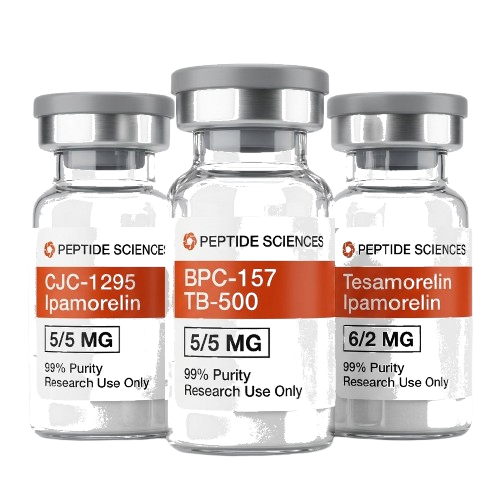
Peptide Sciences provides a broad selection of research peptides and laboratory compounds presented for controlled scientific, analytical and investigative use. The catalog includes peptide materials, blends, research proteins, amino-acid derivatives, topical compounds and other specialized research products.
Researchers can move directly from the complete research catalog into focused collections such as growth hormone peptides , metabolic research peptides , nootropic research peptides , collagen peptides and healing and tissue-response research peptides .
Peptide Sciences also connects product discovery with educational resources covering peptide purity testing , Certificates of Analysis and lyophilized peptide stability .
Compare research materials connected to related receptors, signaling pathways, tissue systems and laboratory research questions.
Explore GHRH-, GHSR-, IGF- and growth-hormone-axis research materials.
Explore category →Compare GLP-1, GIP, glucagon, amylin and related metabolic research pathways.
Explore category →Browse compounds associated with neurotrophic, synaptic and cognitive research models.
Explore category →Review copper-peptide, fibroblast and extracellular-matrix research materials.
Explore category →Explore materials studied across cellular migration, matrix and tissue-response pathways.
Explore category →Review representative products across metabolic, tissue-response, collagen, cosmetic and growth-hormone-related research.
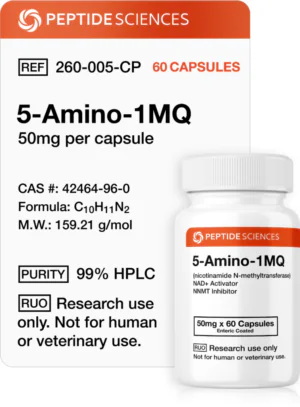
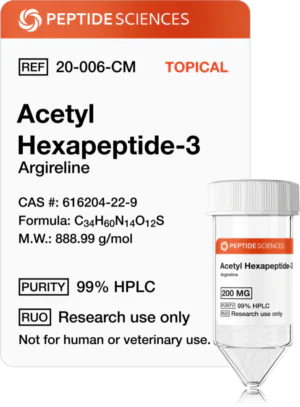
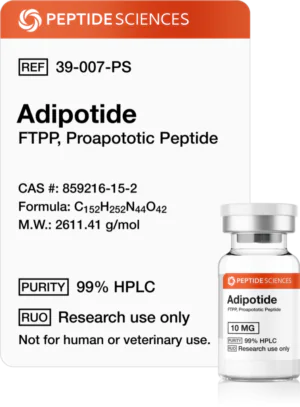
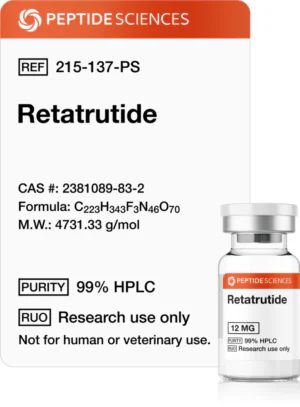
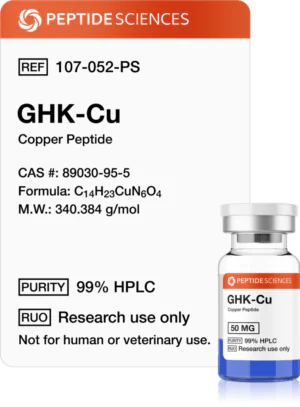
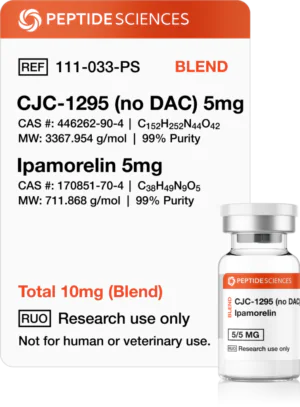
Peptide Sciences organizes related compounds so researchers can compare materials within the same broad research topic without treating them as interchangeable.
In metabolic research, Semaglutide , Tirzepatide and Retatrutide represent different GLP-1, GIP and glucagon receptor research models.
Researchers can first review the GLP-1, GIP and glucagon receptor research guide before comparing individual metabolic research products.
Tissue-response research can similarly move from the healing and tissue-response category to compounds such as BPC-157 10mg and related BPC-157 / TB-500 formulations.
Educational resources connect the Peptide Sciences catalog with broader laboratory concepts and research terminology.
Learn about peptide structure, research categories and laboratory research applications.
Read guide →Understand HPLC, mass spectrometry, analytical purity and complementary testing concepts.
Read guide →Explore freeze-drying, moisture, temperature, light and laboratory storage considerations.
Read guide →Learn how batch identifiers, analytical methods and reported results relate to Certificates of Analysis.
Read guide →Compare single-, dual- and triple-receptor metabolic research models.
Read guide →Use the supporting pages to understand ordering, policies, product information and research-only positioning.
Learn more about the catalog and research-focused structure of the website.
About Us →Review frequently asked questions covering products, orders, accounts and support.
View FAQ →Review current payment and shipping information before placing an order.
Payment & Shipping →Contact the site team for product, order, account or website support questions.
Contact Us →Peptide Sciences presents research peptides, blends, proteins and additional laboratory compounds for scientific and analytical research.
Use the research categories on this page or visit the Peptide Sciences Shop to browse the full catalog.
Read the peptide purity testing guide and the Certificate of Analysis guide .
No. Products referenced on this website are presented for laboratory, analytical, identification and scientific research purposes only.
Compare research products by category, molecular context and product format, then use the educational library to explore the scientific concepts connected to the catalog.