Nootropic Peptides for Cognitive & Neuroscience Research
Explore our collection of nootropic peptides and cognitive research compounds for laboratory investigations involving neuroplasticity, neurotrophic signaling, neuronal communication, memory-associated pathways, synaptic biology, and other mechanisms relevant to modern neuroscience.
At Peptide Sciences, researchers can compare specialized compounds including Semax, Selank, P21, FGL-S, and Dihexa within one focused cognitive research category.
All products listed here are supplied strictly for scientific, analytical, identification, and laboratory research purposes.
What Are Nootropic Peptides?
Nootropic peptides are peptide-based compounds investigated in experimental neuroscience for their interactions with molecular pathways associated with neuronal signaling, synaptic function, neurotrophic factors, cellular communication, and cognitive processes.
Different compounds in this category have distinct molecular structures and research targets. Laboratory studies may investigate mechanisms associated with neuroplasticity, neurotransmitter systems, growth-factor signaling, neuronal survival, synaptic organization, or cellular responses to experimental stress.
The category also includes selected cognitive research compounds that are not necessarily peptides but are relevant to similar neuroscience investigations.
Semax Peptide Research
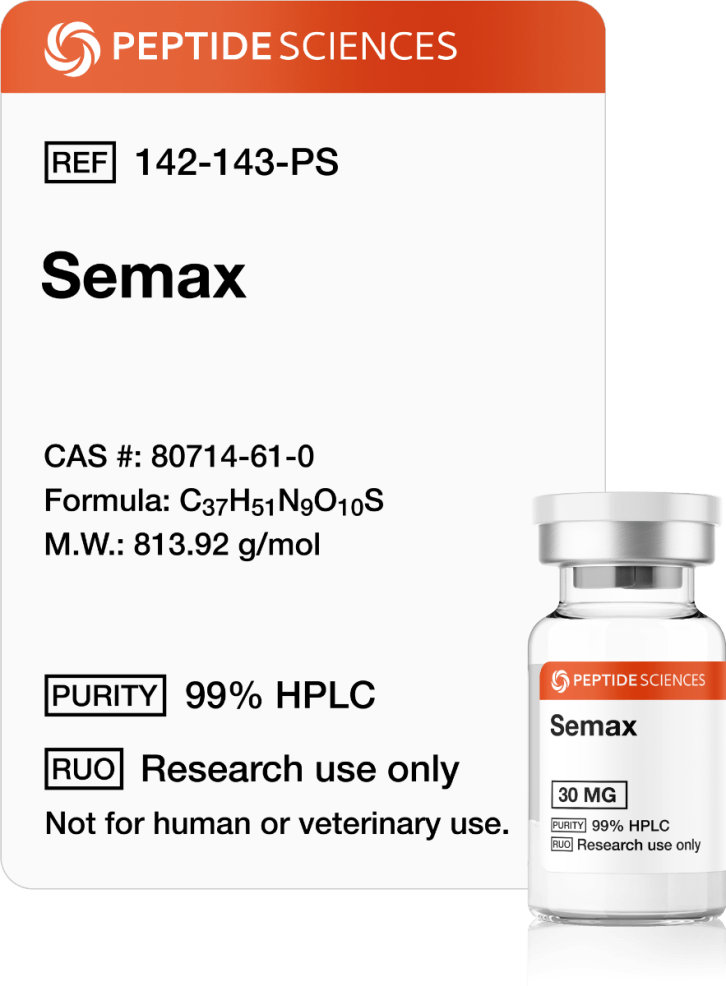
Semax 30mg is one of the primary nootropic peptides available through Peptide Sciences.
Semax is widely investigated in experimental neuroscience involving neurotrophic signaling, neuronal communication, neuroplasticity, neurotransmitter-associated pathways, and cellular responses within central nervous system models.
Researchers may examine Semax in studies involving pathways associated with brain-derived neurotrophic factor, synaptic signaling, neuronal adaptation, and other molecular mechanisms connected with cognitive-function research.
Selank Peptide Research
Selank 10mg provides another specialized peptide model for neuroscience research.
Laboratory investigations involving Selank may examine neuropeptide signaling, neurotransmitter-associated mechanisms, gene-expression patterns, neuronal communication, and molecular pathways associated with cognitive and behavioral research.
Because Semax and Selank represent different peptide sequences, comparative laboratory studies can help researchers investigate how distinct neuropeptides interact with separate signaling networks.
P21 / P021 Peptide Research
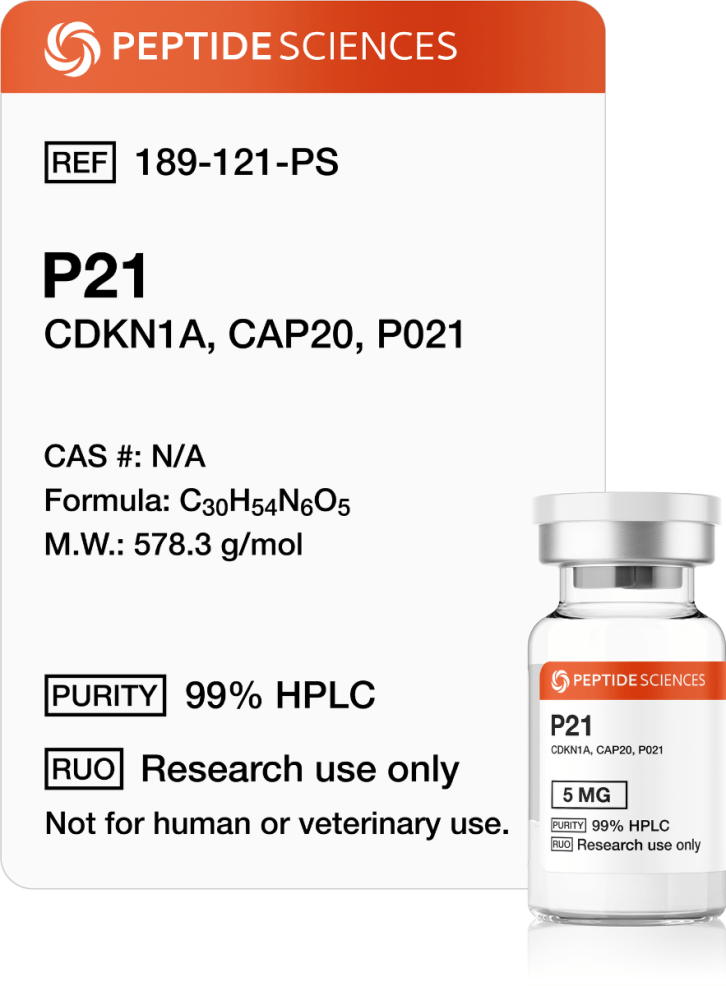
P21 (P021) 5mg is another research peptide within our Nootropics / Cognitive collection.
P21 is relevant to experimental investigations involving neurotrophic mechanisms, neuronal development, synaptic biology, and cellular pathways associated with learning and memory models.
Researchers interested in neuroplasticity can use P21 as a distinct molecular model when studying signaling mechanisms related to neuronal growth, synaptic organization, and nervous-system cellular communication.
FGL-S for Neurotrophic & Synaptic Research
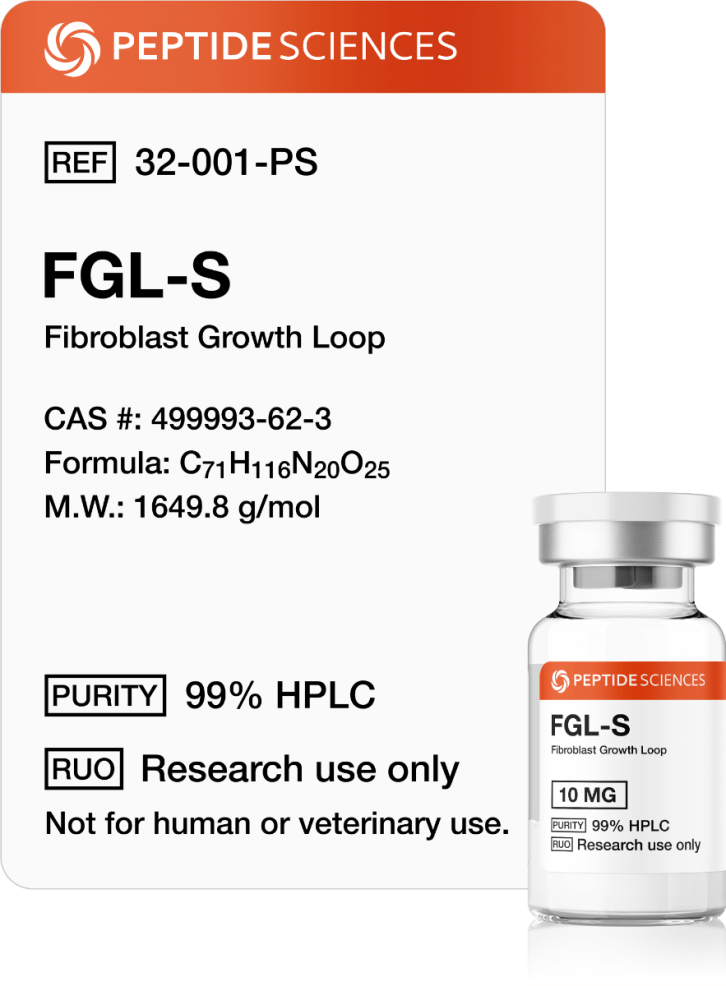
FGL-S 10mg expands the category into research involving peptide-mediated neuronal signaling and neurotrophic pathways.
FGL-related research is particularly relevant to experimental models examining neuronal communication, synaptic plasticity, receptor-associated signaling, and molecular mechanisms involved in nervous-system development and adaptation.
Dihexa Cognitive Research
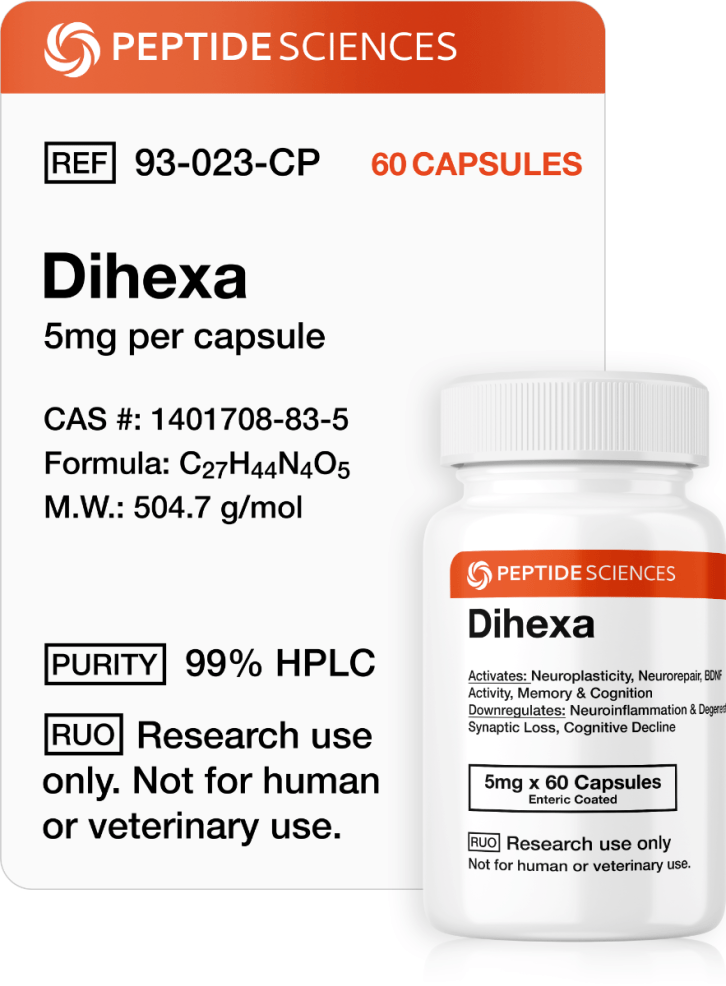
The collection also includes Dihexa 5mg × 60 Capsules (300mg).
Dihexa is included within this category because of its relevance to cognitive and neuroscience research, although it should be distinguished from conventional peptide sequences.
Laboratory studies involving Dihexa may investigate molecular signaling associated with neuronal connectivity, synaptic organization, growth-factor-related pathways, and experimental models of neuroplasticity.
Nootropic Peptide Research Applications
Depending on the compound and experimental design, nootropic peptide research may involve:
- Neuroplasticity-associated pathways
- Neurotrophic signaling
- Synaptic communication
- Neuronal growth and differentiation
- Memory-associated molecular pathways
- Learning-related experimental models
- Neurotransmitter signaling
- Gene-expression research
- Neuronal stress-response mechanisms
- Growth-factor-associated signaling
- Central nervous system cellular communication
- Comparative cognitive compound research
These research areas describe experimental applications and should not be interpreted as claims that these compounds improve memory, intelligence, focus, mood, or other cognitive functions in humans.
Semax vs Selank vs Other Cognitive Research Peptides
Researchers should not treat all nootropic peptides as interchangeable. Semax, Selank, P21, and FGL-S have different structures and are associated with different experimental pathways.
Semax is frequently investigated in neurotrophic and neuroplasticity-related research, while Selank provides a different model for neuropeptide and neurotransmitter-associated signaling.
P21 and FGL-S extend the category into additional neurotrophic, synaptic, and neuronal signaling models, while Dihexa provides a separate cognitive research compound for comparative investigation.
Selecting the appropriate material depends on the study hypothesis, molecular target, concentration requirements, controls, experimental system, and analytical methods.
Related Cognitive & Sleep Research
Neuroscience research often overlaps with investigations involving circadian signaling, sleep-associated pathways, and other neuroregulatory mechanisms. Researchers conducting broader nervous-system studies can therefore compare cognitive research compounds with other peptide categories available through the Peptide Sciences catalog.
Maintaining separate categories for cognitive and sleep-related research helps organize compounds by their primary experimental focus while still supporting relevant internal relationships between related areas of neuroscience.
Why Choose Peptide Sciences for Nootropic Peptides?
Peptide Sciences organizes cognitive research compounds into a focused collection so laboratories can more easily compare peptide sequences, formulations, concentrations, and areas of neuroscience investigation.
Before incorporating any nootropic peptide or cognitive research compound into an experimental protocol, researchers should review available specifications, analytical documentation, molecular information, concentration, storage requirements, relevant scientific literature, and appropriate experimental controls.
Browse all Peptide Sciences research peptides to explore additional individual peptides, research blends, capsules, topical compounds, and specialized laboratory materials.
Research Use Only: All nootropic peptides and cognitive research compounds listed in this category are intended strictly for laboratory, analytical, identification, and scientific research. They are not intended for human or animal consumption, diagnosis, treatment, enhancement of cognitive performance, prevention of disease, or therapeutic use.