Immune Support Peptides for Immunomodulation Research
Explore our specialized collection of immune support peptides for laboratory research involving immune signaling, thymic regulation, cytokine pathways, cellular defense mechanisms, inflammatory signaling, and immunomodulatory processes.
At Peptide Sciences, this category brings together research compounds associated primarily with thymic peptide signaling and immune-system regulation. Researchers can compare different peptide sequences and concentrations according to the requirements of their experimental models.
All products in this collection are supplied strictly for scientific, analytical, identification, and laboratory research purposes.
What Are Immune Support Peptides?
Immune support peptides are peptide compounds studied for their interactions with molecular and cellular pathways involved in immune-system communication and regulation.
Laboratory investigations may examine mechanisms involving T-cell signaling, cytokine expression, thymic function, cellular differentiation, inflammatory pathways, immune-cell communication, and the molecular processes that contribute to immune homeostasis.
Rather than implying a therapeutic immune benefit, this category is organized around compounds that provide useful experimental models for researchers studying immunology and peptide-mediated biological regulation.
Thymosin Alpha-1 Research
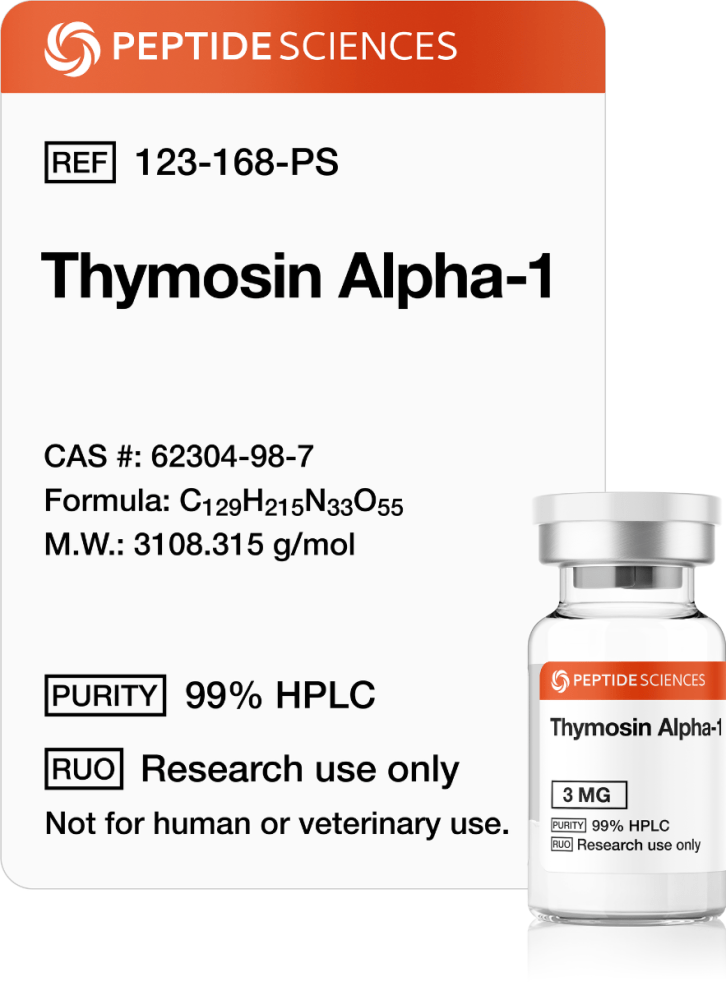
Thymosin Alpha-1 is one of the primary research peptides within our immune-support collection. It is widely investigated in immunology research because of its relationship with thymic activity and immune-cell signaling.
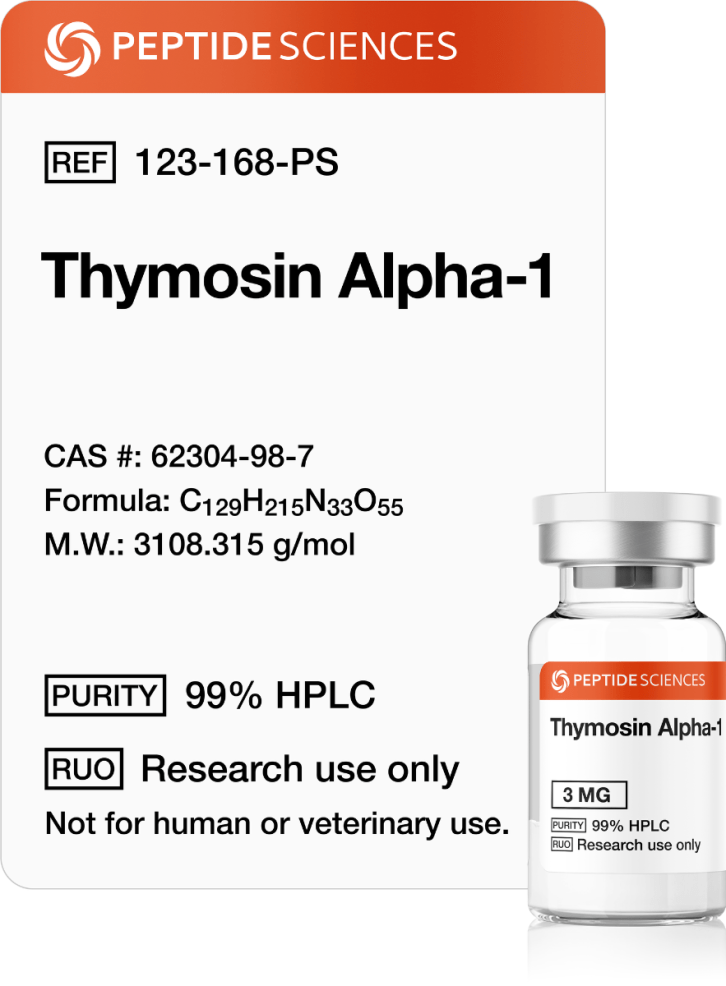
Researchers can compare Thymosin Alpha-1 3mg and Thymosin Alpha-1 10mg depending on concentration requirements and experimental design.
Laboratory studies involving Thymosin Alpha-1 may examine peptide interactions with immune-cell signaling, T-cell-associated pathways, cytokine expression, innate and adaptive immune mechanisms, and other components of immunological communication.
Thymalin Peptide Research
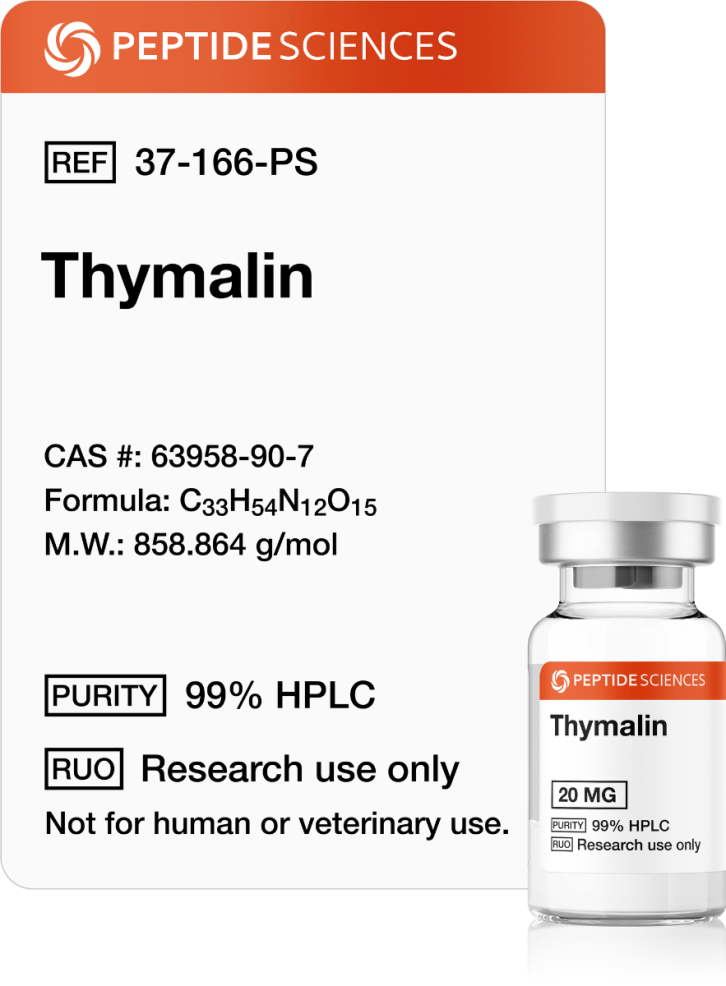
Thymalin 20mg provides another research model for investigations involving thymic peptides and biological regulation.
Thymalin is associated with research into peptide-mediated cellular communication and mechanisms connected with thymic and immune-system function. Its distinct composition makes it useful for comparative laboratory studies alongside other thymic research peptides.
Thymagen / Thymogen Research
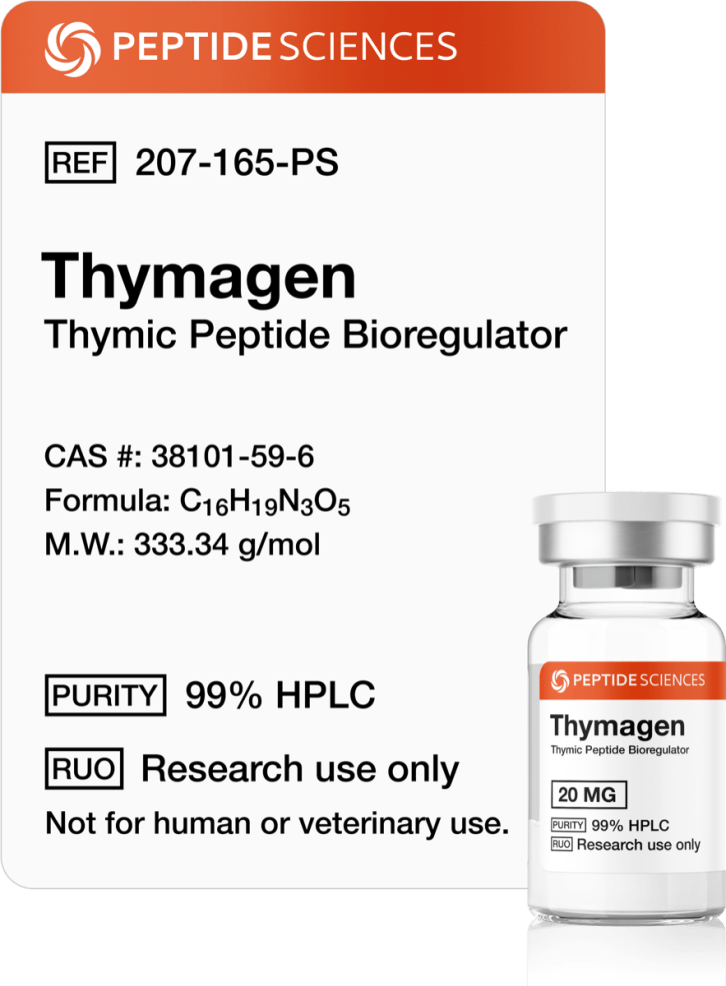
The collection also includes Thymagen (Thymogen) 20mg, another peptide associated with thymic and immunoregulatory research.
Researchers may use Thymagen as an experimental tool when investigating short-peptide signaling, immune-associated cellular pathways, regulatory mechanisms, and interactions relevant to thymic biology.
Thymic Peptides & Immune Signaling Research
The thymus plays an important role in immune-system development and regulation, making thymic peptides an important field of scientific investigation.
Research involving peptides such as Thymosin Alpha-1, Thymalin, and Thymagen may examine several interconnected areas of immunology, including:
- T-cell-associated signaling
- Thymic peptide biology
- Innate and adaptive immune communication
- Cytokine-associated pathways
- Immune-cell differentiation
- Cellular defense signaling
- Immunomodulatory mechanisms
- Inflammatory signaling pathways
- Cellular communication
- Immune homeostasis research
Different compounds should not be assumed to produce equivalent biological responses. Researchers should select peptides according to the specific signaling pathway, cellular model, concentration, controls, and analytical methods required by the study.
Thymosin Alpha-1 vs Other Thymic Peptides
The Peptide Sciences Immune Support category allows researchers to compare several different forms of thymic peptide research.
Thymosin Alpha-1 represents a defined peptide sequence frequently investigated in immunological signaling models, while Thymalin and Thymagen provide additional research approaches involving thymic and peptide-bioregulation pathways.
Comparing these compounds within carefully controlled experimental systems may help researchers examine differences in molecular signaling, cellular response, and peptide-specific biological activity.
Related Immunomodulatory Peptide Research
Researchers studying inflammatory and immunological signaling may also encounter other peptide classes elsewhere in the Peptide Sciences catalog. These compounds should remain separated by category when their primary research mechanisms differ, helping researchers navigate the site by experimental application rather than placing every immune-associated compound into one broad collection.
Why Choose Peptide Sciences for Immune Support Peptides?
Peptide Sciences organizes related research compounds into focused categories so laboratories can more easily compare peptide sequences, concentrations, formulations, and areas of scientific investigation.
Before incorporating an immune-support peptide into an experimental protocol, researchers should review the product specifications, concentration, available analytical documentation, storage requirements, relevant scientific literature, and appropriate laboratory controls.
Browse all Peptide Sciences research peptides to explore additional peptide categories, individual research compounds, peptide blends, topical formulations, capsules, and specialized laboratory materials.
Research Use Only: All immune support peptides listed in this category are intended strictly for laboratory, analytical, identification, and scientific research. They are not intended for human or animal consumption and are not intended to diagnose, treat, cure, prevent, or modify any disease or medical condition.